A few years ago, I watched a nurse carry a huge bouquet of stargazer lilies out of a patient’s room. The patient was sharing the room with someone who had asthma, and within an hour the scent had filled the whole hallway. The sender meant well. The flowers still had to go. It’s a small story, but it shows why choosing hospital flowers takes a little more thought than picking whatever looks prettiest.
Flowers can brighten a sterile room and make a patient feel remembered. They can also cause sneezing fits, trigger allergies, or break a unit’s rules. Here is how to get it right.
Check the rules before you buy anything
This is the step most people skip. Many U.S. hospitals restrict or ban fresh flowers in certain units, including:
- Intensive care units (ICU): often no flowers at all, because of infection risk and limited space.
- Oncology and transplant wards: patients with weakened immune systems can be vulnerable to mold and bacteria found in soil, water, and plant material.
- Neonatal and maternity units: policies vary, and some restrict strong scents.
- Rooms with oxygen therapy: space is tight, and fragrance can irritate patients with breathing problems.
A two-minute call to the hospital’s front desk or the nurses’ station saves you from an awkward drop-off. Ask whether fresh flowers, potted plants, or balloons are allowed on that floor. Policies can change, and since the pandemic many facilities have tightened them.
Flowers that tend to work well
The best hospital arrangements are low-fragrance, long-lasting, and compact. A room is not a garden, and the bedside table is usually about the size of a dinner plate.
Good choices
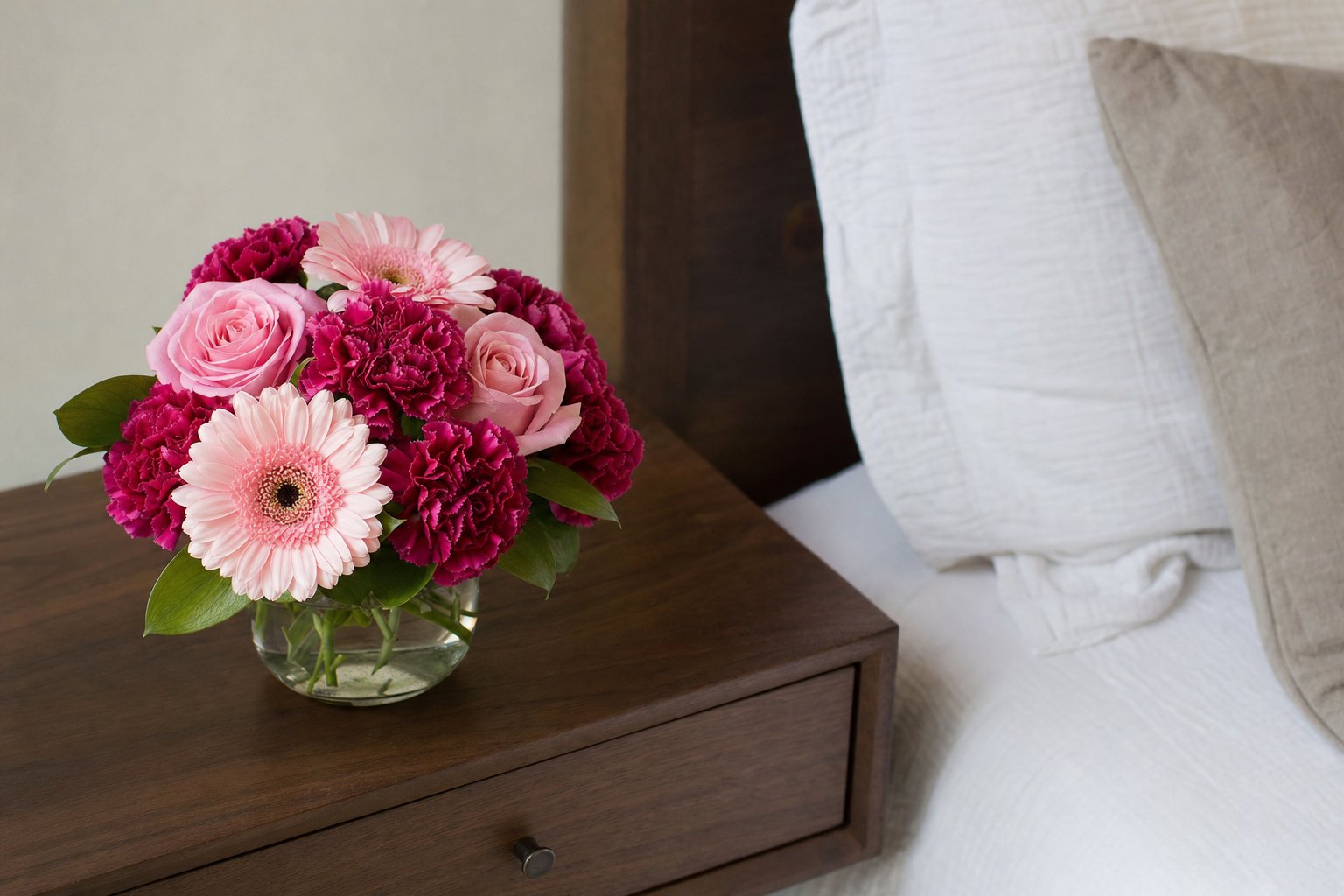
- Roses: most varieties have a light scent, hold up well for a week or more, and suit nearly every relationship. Cheerful colors like yellow, peach, and pink work better than deep red, which can feel too romantic for a coworker or neighbor.
- Carnations: underrated and sturdy. They can last two weeks and have a mild, slightly spicy scent.
- Gerbera daisies: bright, bold, and almost unscented. They look cheerful even in a plastic hospital pitcher.
- Alstroemeria (Peruvian lily): long-lasting and fragrance-free. It’s a florist favorite for exactly this reason.
- Snapdragons and sunflowers: tall, colorful, and cheerful, with little scent. Choose pollen-free sunflower varieties where possible.
- Orchids: a potted phalaenopsis is elegant and can bloom for weeks. Check the unit’s policy on potted plants first.
Think about size and color too
Choose a small or medium arrangement in a sturdy, low-profile container. Tall, top-heavy vases tip over easily and crowd the space that nurses need to reach equipment. Soft, sunny colors tend to lift the mood. If you know the patient’s favorite color, use it. A personal touch means more than a perfect floral recipe.
Flowers to leave at the florist
Some blooms are lovely in a living room but a bad idea in a hospital room.
- Lilies (especially Oriental and stargazer): the fragrance is powerful, and the heavy pollen stains clothes and bedding. Lilies are also highly toxic to cats, which matters once the patient goes home.
- Hyacinths, gardenias, and tuberose: intensely perfumed. Someone who feels nauseated from medication or treatment may find the scent unbearable.
- Freesia and jasmine: beautiful, but strongly aromatic.
- Baby’s breath and chrysanthemums: common allergy triggers for some people.
- Heavily pollinating flowers: daisies, certain sunflowers, and goldenrod-type fillers can aggravate hay fever and asthma.
Also be careful with very large arrangements, dried bouquets that shed, and anything wrapped in a lot of moss or loose soil. They collect dust and can shed debris in a space that is supposed to stay clean.
Small details that make a big difference
- Ask about allergies. A quick text to a family member is enough. Roommates count too, since many rooms are shared.
- Choose a vase that can go home. Hospitals often can’t supply one, so a simple, inexpensive container is a thoughtful touch. Plastic is safer than glass.
- Add a short card. Patients often receive visitors and gifts all at once. A note keeps track of who sent what.
- Time it well. Flowers arriving right after surgery may overwhelm someone who is groggy. Recovery days two or three are often better.
By the way, I’ve noticed that families often appreciate a bouquet that is easy to move. When a patient is discharged, they don’t want to juggle a fragile vase along with a bag of belongings.
When flowers aren’t an option
If the unit bans fresh flowers, or you simply aren’t sure, there are good alternatives. A small framed photo, a soft blanket, a puzzle book, a phone charger with a long cable, or a handwritten letter can mean as much as a bouquet. Some people also send flowers to the patient’s home for after discharge, when they have more space and energy to enjoy them.
The short version
Call ahead, choose low-scent and sturdy blooms like roses, carnations, gerberas, and alstroemeria, and skip heavily perfumed or pollen-heavy flowers such as lilies and hyacinths. Keep the arrangement small and the card personal. If you’re ever unsure, ask the nursing staff. They’ve seen it all, and they’ll gladly point you in the right direction. A thoughtful, simple gesture is nearly always the one that is remembered.